Table of Contents
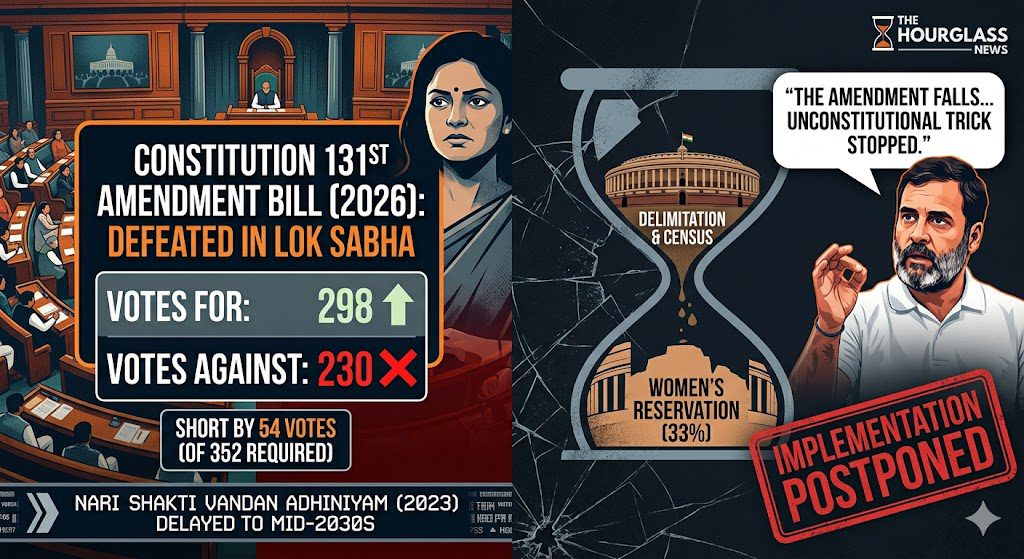
New Delhi – Women’s Reservation Bill defeat in the Lok Sabha today has sent shockwaves through the political landscape after the 131st Amendment failed to secure a two-thirds majority. In a dramatic turn of events, the proposal to expand parliamentary seats to 850 was struck down following an intense 21-hour debate, delaying hopes for immediate gender parity in India’s legislatures.
The Numbers: Short of the Finish Line
The voting followed an intense 21-hour session of deliberation. While a majority of the House supported the move, it lacked the decisive weight needed:
Take a Short look on Numbers:
- Total Votes Cast: 528
- Votes in Favor: 298
- Votes Against: 230
- Target for 2/3 Majority: 352
The Bill fell short by 54 votes, leading to its immediate rejection.
The Objective: Why the Expansion?
The primary goal of the 131st Amendment was to bypass the long waiting period attached to the Nari Shakti Vandan Adhiniyam (106th Amendment Act, 2023).
Under the 2023 Act, women’s reservation is tethered to the completion of the next census and the subsequent delimitation of constituencies-a process many experts believe won’t be finalized until the mid-2030s. The 2026 Bill proposed a bold shortcut: expanding the Lok Sabha from 543 to 850 seats. By increasing the total volume of the House, the government aimed to carve out the 33% women’s quota immediately, ensuring that no existing seats would be displaced. This would have potentially allowed for reserved seats to be active by the 2029 General Elections.
Opposition Reaction: “An Unconstitutional Trick”
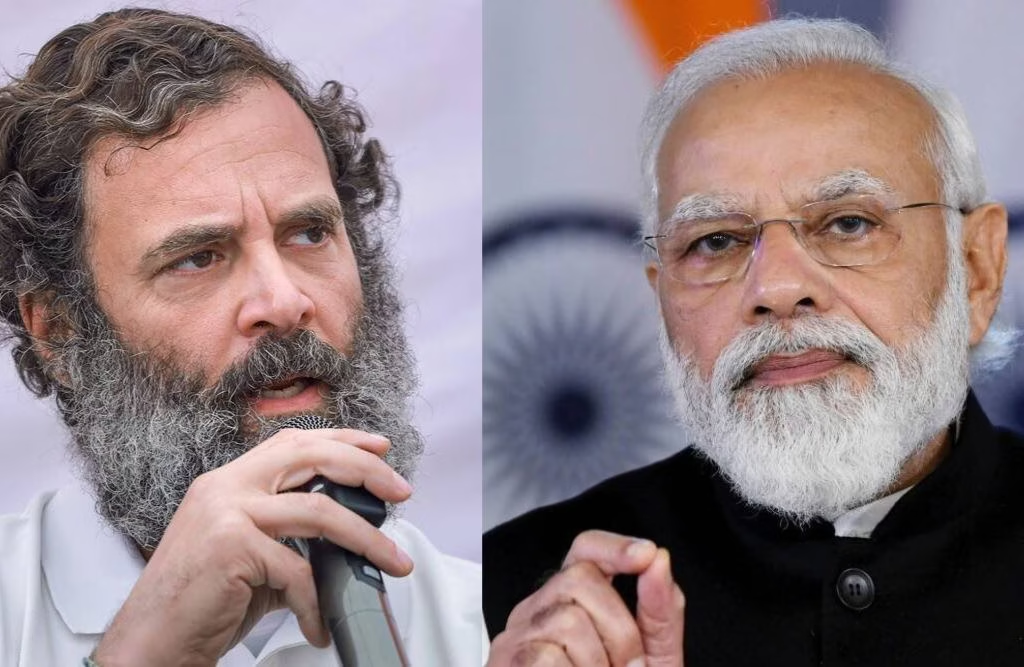
Minutes after the results were announced, Leader of Opposition Rahul Gandhi launched a scathing attack on the government. In a post on X (formerly Twitter), he framed the defeat as a victory for the Constitution.
“The amendment bill has fallen. They used an unconstitutional trick to break the Constitution in the name of women. India has seen it. INDIA has stopped it,” Gandhi stated, crediting the unity of the INDIA bloc for the Bill’s failure.
Political Fallout of the Women’s Reservation Bill Defeat
Rahul Gandhi further sharpened his critique, dismissing the legislation as “Anti-National” and detrimental to the rights of OBC, SC, and ST communities. He argued that the expansion plan unfairly targeted the interests of South India, the North-East, and smaller states, stating:
“This is not a Women’s Reservation Bill—it has no connection to women. It is anti-OBC, anti-SC/ST, and against the interests of our states. We will not allow anyone’s rights to be snatched, nor will we allow the country to be divided.”
Historical Precedents: A Rare Legislative Hurdle
The defeat of such a high-profile government bill is rare in Indian parliamentary history, though not unprecedented. This setback echoes previous legislative battles:
- Panchayati Raj (1989): The 64th Constitution Amendment, aimed at empowering Panchayati Raj institutions, was famously defeated in the Rajya Sabha during the Rajiv Gandhi administration. It was only years later, under the PV Narasimha Rao government, that it was successfully passed as the 73rd Amendment in 1992.
- POTA (2002): The Atal Bihari Vajpayee-led NDA government faced a similar roadblock when the Prevention of Terrorism Act (POTA) was defeated in the Rajya Sabha. To overcome the hurdle, the government took the rare step of convening a joint session of Parliament to ensure its passage.
What Happens Next?
With the defeat of this Bill, the status quo remains. The 2023 Women’s Reservation Act is still law, but its implementation remains “on ice” until the census and delimitation exercises are completed.
The Union Cabinet is scheduled to meet this Saturday to discuss the fallout. The government has yet to announce if it will pursue a joint session-similar to the 2002 precedent-or simply wait for the original, longer timeline to play out. For now, the dream of seeing 33% women in Parliament by 2029 has hit a major legislative roadblock.
Follow us: https://youtube.com/@thgn_2026?si=cjZud4CMWMpHYHUb