
Key Highlights
Young Heart Attack Causes 2026: Why Your 30s are the New Risk Zone
For decades, we viewed the heart attack as an “old man’s disease”—a destination reached after a lifetime of wear and tear. But in 2026, the narrative has shifted dangerously. From corporate boardrooms in Hyderabad to fitness hubs in Mumbai, a silent crisis is unfolding: the “Young Heart Attack.”
Data from the Inaugural JACC Cardiovascular Statistics 2026 report reveals a sharp rise in hospitalizations for severe first heart attacks among adults aged 18 to 54. This isn’t just about “bad luck”; it’s about a modern lifestyle that is biologically incompatible with our hearts.
1. The ‘Hustle’ is a Physiological Threat
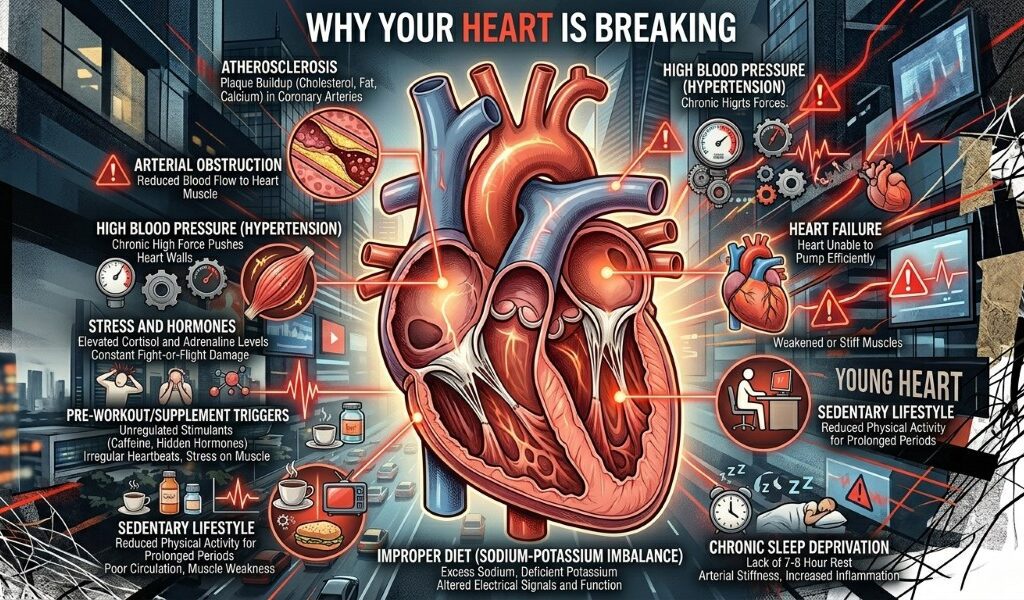
We often talk about stress as a mental burden, but your heart experiences it as a chemical flood. The “Hustle Culture” keeps your body in a state of chronic alert, releasing a continuous stream of cortisol and adrenaline.
- The Consequence: This isn’t just fatigue. These hormones cause inflammation that damages the delicate lining of your arteries, making plaque buildup a reality even in your 20s.
Also Read: Assam Elections 2026: Himanta Biswa Sarma to Sue Pawan Khera Over ‘Fabricated’ Passport Claims
Young Heart Attack Causes 2026: Why Your 30s are the New Risk ZoneAlso Read: Strong 5.9 Magnitude Earthquake Jolts Delhi-NCR and North India: Epicenter in Afghanistan
2. The ‘Gym Paradox’ and Hidden Triggers
Being “active” doesn’t always mean being “heart-safe.” A rising concern in 2026 is the unsupervised use of:
- Pre-workout Stimulants: High doses of caffeine can trigger irregular heartbeats.
- Unregulated Supplements: Many beauty and fitness products contain hidden hormones that strain the cardiac muscle.
- The “Sedentary Athlete”: Sitting for 10 hours at a desk followed by 1 hour of intense gym work doesn’t “cancel out” the damage of physical inactivity.
3. The Symptoms You’re Ignoring
Standard news tells you to look for crushing chest pain. But research shows that younger adults—especially women—often experience “atypical” signs that are dismissed as indigestion or work fatigue:
- Jaw or Shoulder Pain: Discomfort that radiates upward or to the back.
- Sudden Nausea: Feeling “sick to your stomach” without a clear dietary cause.
- The ‘Band’ Sensation: Not a sharp pain, but a feeling like a tight band is squeezing your chest.
| Strategy | Actionable Step |
| Exercise Snacks | Instead of one long gym session, take three 10-minute bursts of vigorous activity during the workday to improve blood vessel function. |
| The 7-Hour Rule | Chronic sleep deprivation (less than 6 hours) is now directly linked to arterial stiffness. Aim for 7–8 hours as a non-negotiable medical requirement. |
| Know Your Ratios | It’s not just about “low salt.” Focus on a high Sodium-Potassium ratio by increasing leafy greens and avocados to help vessels relax. |
| Digital Detox | Constant connectivity keeps your Heart Rate Variability (HRV) low. Use “box breathing” for 5 minutes twice a day to reset your nervous system. |
Follow Us: https://youtube.com/@thgn_2026?si=RlGfpwS6in8sDh5W
Young Heart Attack Causes 2026: Why Your 30s are the New Risk Zone