Tripura Durga Bari Basanti Puja: The Royal Legacy of the Two-Armed Goddess
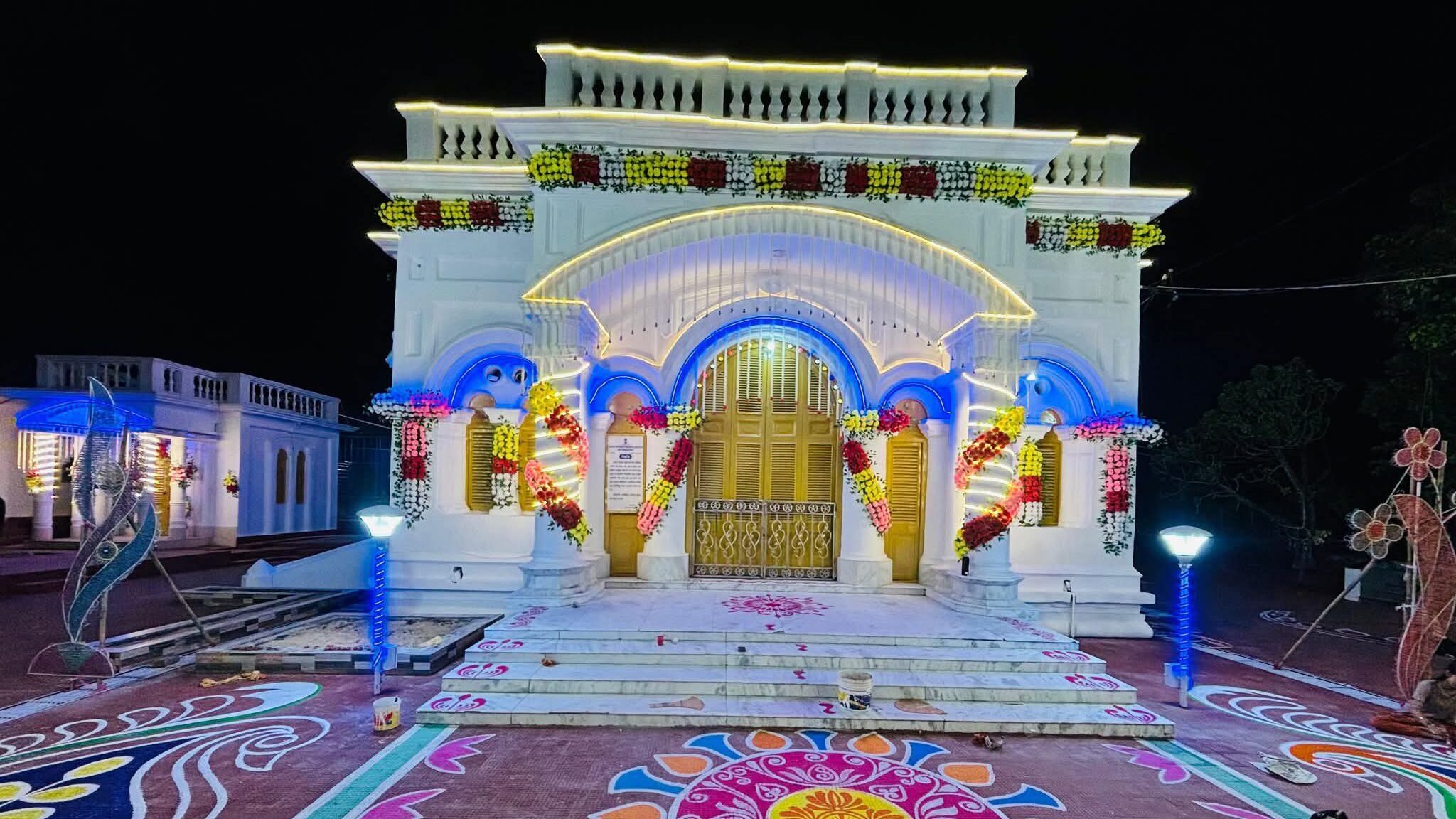
Agartala: While the grand festivities of West Bengal often steal the spotlight, the state of Tripura preserves a religious tradition that is equally ancient and perhaps more steeped in royal mystique. At the heart of this celebration is the Durga Bari, the official temple of the Tripura Royal Family. Standing majestically in front of the Ujjayanta Palace in Agartala, this temple is recognized as the largest Durga shrine in Eastern India, serving as a living testament to the five-century-long reign of the Manikya Dynasty. At present, during the spring season, Goddess Durga is being worshipped in her Basanti form at this Durga Bari.
The Royal Roadmap
The Nomadic History of a Royal Temple
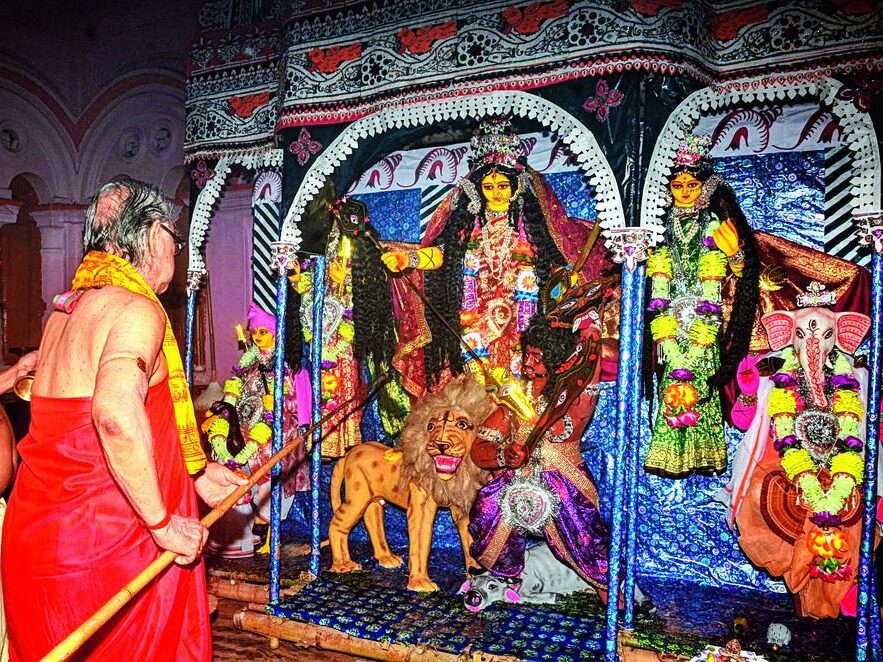
The history of Durga Bari is intrinsically linked to the shifting capitals of the Tripura Kingdom. The puja was originally established in Udaipur, the ancient seat of the Manikya kings. As the administrative center moved to accommodate the changing needs of the realm, the deity followed. The temple saw transitions to Amarpur and the Old Haveli in Agartala before finally being established at its current site in 1838.
This final relocation was overseen by Maharaja Krishna Kishore Manikya Bahadur. The current structure, which stands nearly as old as the 120-year-old Ujjayanta Palace, remains the primary spiritual hub for the people of Tripura during the autumn festival.
Also Read: https://thehourglassnews.com/west-bengal-sir-2026-voter-list-update/
From Basanti to Sharadiya: The Evolution of Worship
Historical records suggest that the formal worship of Goddess Durga by the Manikya clan began as early as the 15th century. Numismatic evidence-specifically coins from the reign of Maharaja Ratna Manikya (1464–1467 AD)-confirms the presence of Devi Durga in the royal consciousness. However, in those early centuries, the festival was celebrated as Basanti Puja during the spring. It was only later that the Sharadiya or autumnal worship became the dominant tradition, marking the transition from a seasonal rite to a state-wide festival.
The Enigma of the Two-Armed Goddess
The most striking feature of the Agartala Durga Bari is the physical form of the Goddess herself. Unlike the traditional ten-armed (Dashabhuja) idols seen elsewhere, the deity here is Dwibhuja, or two-armed. According to local lore, the remaining eight arms are not missing but are symbolically veiled beneath her saree.
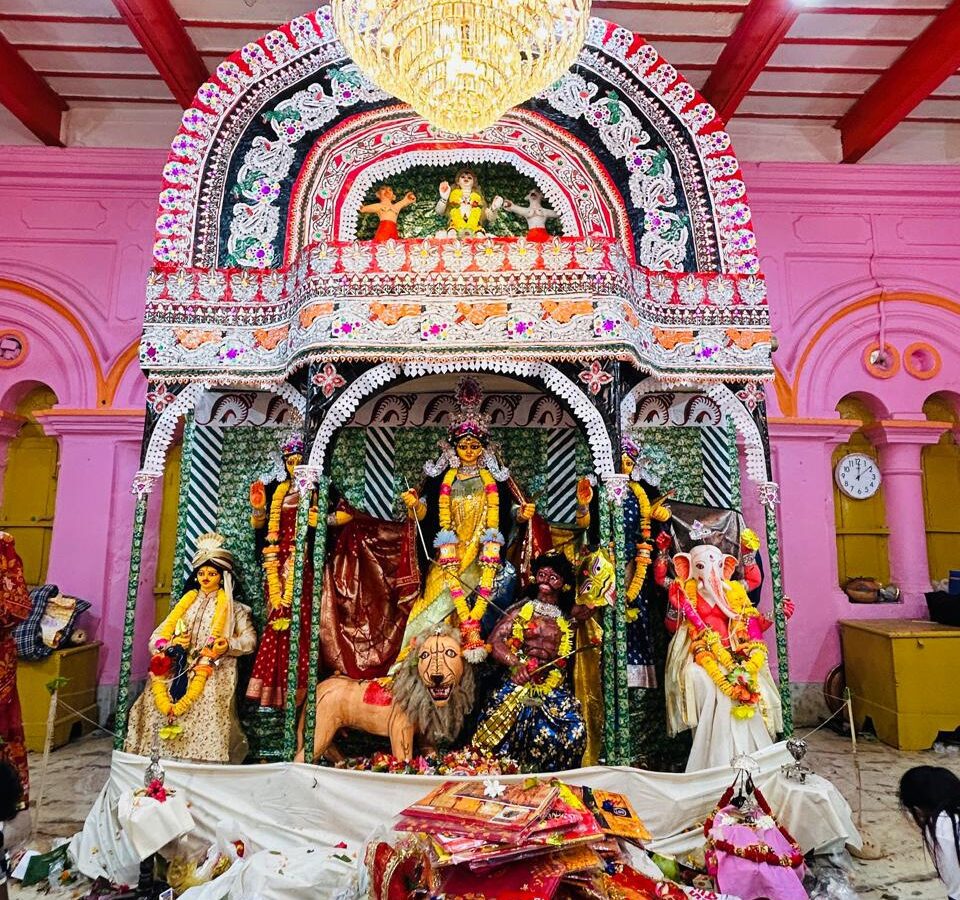
This unique tradition is rooted in a legend involving Maharani Sulakshana. It is said that the Queen once entered the temple during the Anna Bhog (food offering), a time when the doors are strictly closed to the public. She reportedly witnessed the Goddess in her full ten-armed glory, consuming the offerings. The divine sight was so intense that the Queen collapsed in shock. That night, the Maharaja received a divine vision: to spare the devotees from fear and to present a “motherly” image, the Goddess requested to be worshipped in her two-armed form from that day forward.
Also Read: https://thehourglassnews.com/tripura-cm-manik-saha-kerala-election-rally/
A Lineage of Faith and Ritual
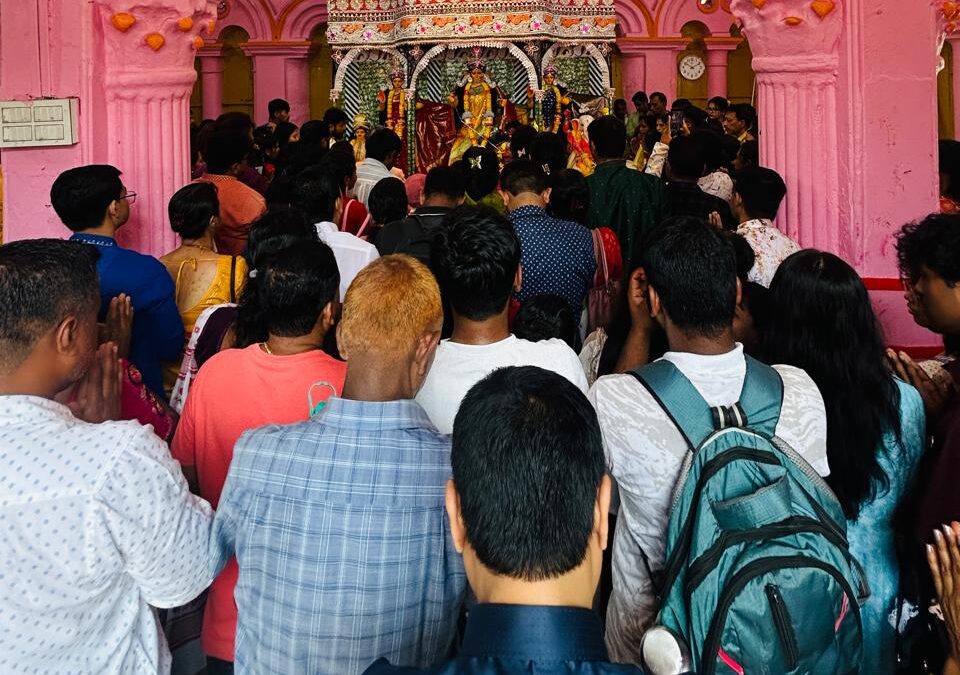
The sanctity of the Durga Bari is maintained by a rare continuity of service. The priests currently officiating the rituals are direct descendants of the original royal priests appointed five centuries ago. This hereditary system ensures that the ancient Vedic mantras and specific royal customs remain untainted by modern changes.
In the era of the Maharajas, the rituals extended beyond the temple walls. Maharaja Bir Chandra Manikya was known to ride on horseback to the ancient Tripureswari Temple in Udaipur during the peak of the festival to offer personal prayers, symbolizing the deep connection between the ruling family and the divine protector of the state.
Communal Harmony and the “Asam Bhojan”
The festival was historically a tool for social cohesion. On Vijaya Dashami, the final day of the puja, the Maharaja would host the Asam Bhojan, a grand communal feast. Breaking all royal protocols of the time, the King would sit on the floor alongside his subjects, from high-ranking officials to common peasants, sharing a meal that lasted until the early hours of the morning. This tradition emphasized that, in the eyes of the Mother, all citizens were equal.
The Grand Procession and State Patronage
The immersion ceremony was a theatrical spectacle that involved the entire capital. All idols from the city were gathered at the Uzir Bari (the current site of the Town Hall). Led by Crown Prince Radha Kishore, the procession moved toward the Dashami Ghat with a display of military and cultural might. The parade featured decorated elephants, horses, and infantry, while the rhythmic Dhupti Dance provided a spiritual cadence to the march.
The order of the procession was strictly dictated by tradition: the “Prabhu Bari” idol went first, followed by the Royal family’s idol, and then those of the ministers and other noble households. Today, although the monarchy has transitioned into a democracy, the tradition persists. The state government of Tripura now provides the financial patronage once offered by the Kings, ensuring that the legacy of the Durga Bari remains the heartbeat of Tripura’s cultural identity.
Follow Us: https://youtube.com/@thgn_2026?si=KdMQV6FL86yUAV0B
Tags- Tripura Durga Bari Basanti Puja, Two-Armed Durga Tripura, Manikya Dynasty Traditions. Tripura Durga Bari Basanti Puja, Two-Armed Durga Tripura, Manikya Dynasty Traditions. Tripura Durga Bari Basanti Puja, Two-Armed Durga Tripura, Manikya Dynasty Traditions. Tripura Durga Bari Basanti Puja, Two-Armed Durga Tripura, Manikya Dynasty Traditions. Tripura Durga Bari Basanti Puja, Two-Armed Durga Tripura, Manikya Dynasty Traditions. Tripura Durga Bari Basanti Puja, Two-Armed Durga Tripura, Manikya Dynasty Traditions.